Mossweb

When custom software makes sense
- The same information is typed into two or three places
- A spreadsheet has grown into something only one person understands
- Orders, bookings or job cards are still tracked on paper or in WhatsApp chats
- The software you pay for does most of what you need, but not the part that matters
- Staff or customers need to log in and see their own information
- Your website needs to do something specific that a plug-in can't
How I approach it
Start with the process
I first learn how the work is done today, who does it and where it goes wrong. The software follows the process, not the other way round.
Build the smallest useful version
The first version does the one job that hurts most. It's in use quickly, and real feedback shapes what comes next.
Works in a browser
Web applications run on any computer or phone with nothing to install, and everyone sees the same up-to-date information.
Connected to your website
Where it helps, the tool ties into your site, so an enquiry or order lands where it needs to be without retyping.
Looked after
I stay responsible for what I build: hosting, backups, fixes and changes as your business changes.
A real example
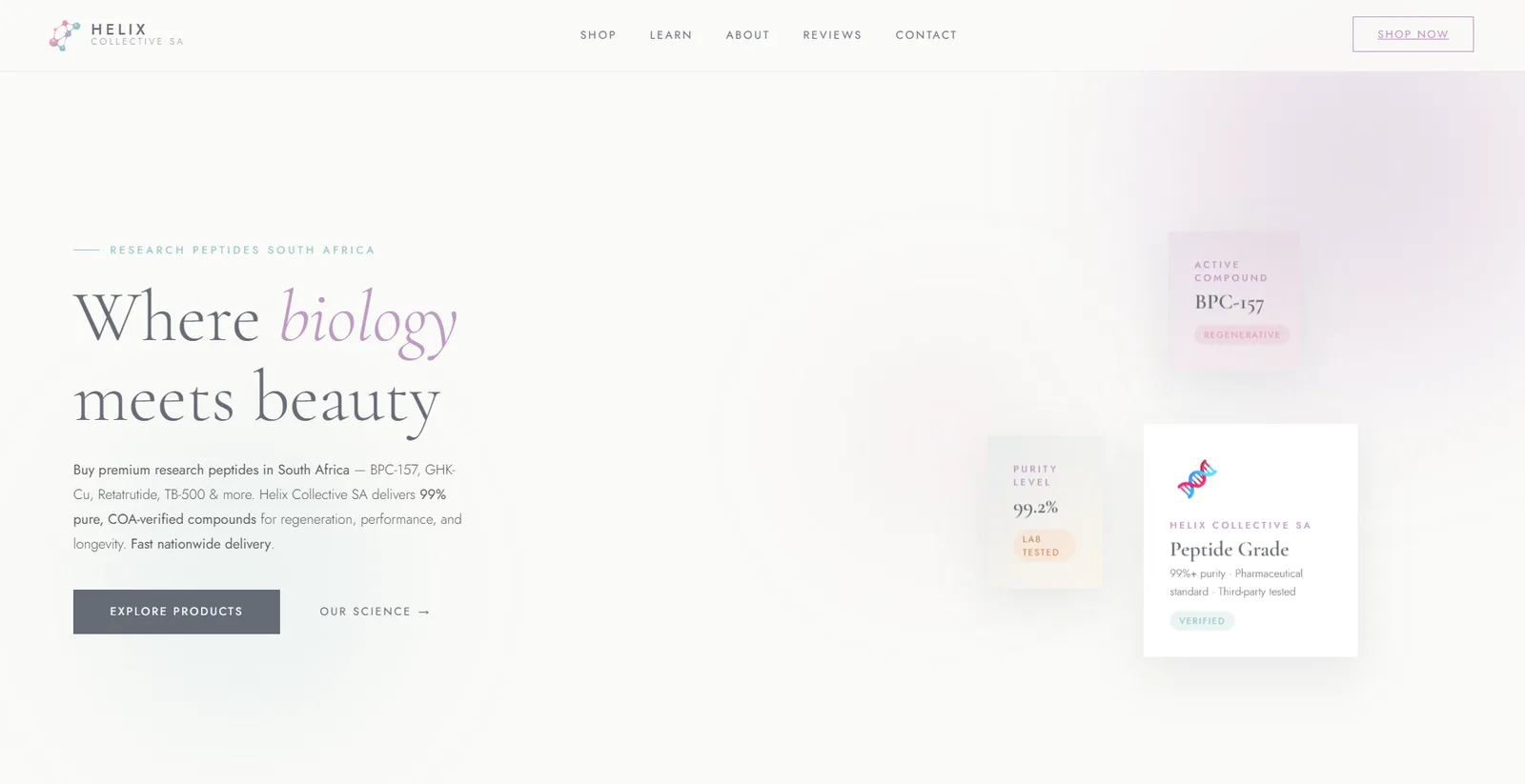
The Helix Collective store needed more than a standard online shop. Alongside 90+ products with filtering, it has an education hub and a batch verification feature built specifically for how that business works. Those are the kind of custom parts that no template includes.
Honest about fit
Custom software isn't always the answer. If an existing product does the job at a fair price, I'll tell you to use it. Building something makes sense when the saving in time or mistakes is clear, and I'll help you work that out before you commit to anything.